
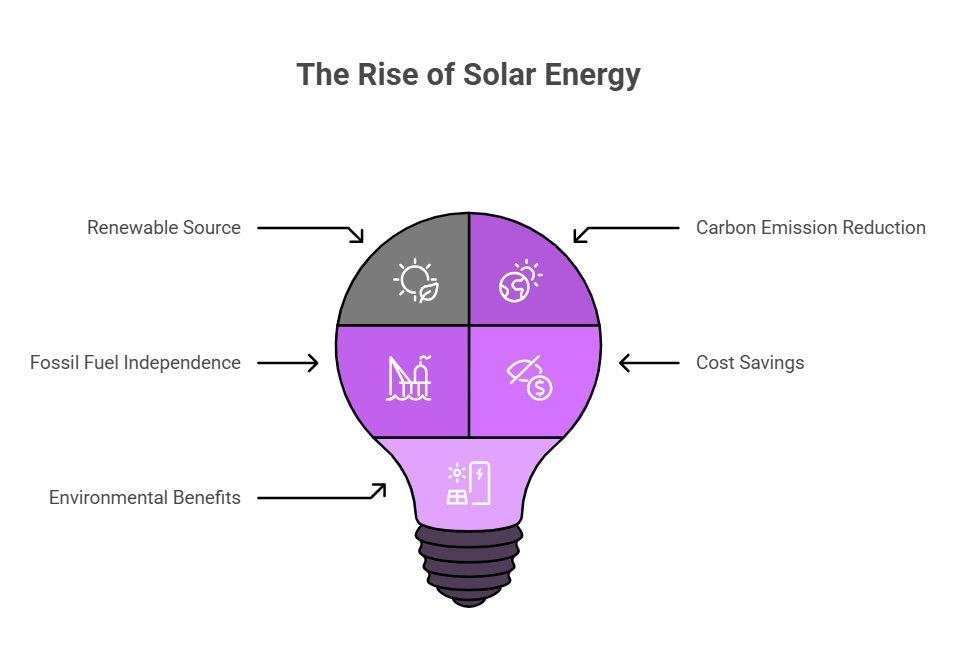
Solar energy is the energy derived from sunlight and converted into electricity or heat using modern technology. It is one of the most rapidly expanding renewable energy sources in the world and plays a central role in reducing carbon emissions and fossil fuel dependence.
With rising electricity costs and increasing environmental concerns, many households and businesses are exploring the transition to solar energy as a long-term solution.
Advantages and Disadvantages of Solar
Before investing in a solar system, it is important to understand both the benefits and drawbacks. Solar power is sustainable and environmentally friendly, but it also comes with financial and technical considerations.
Advantages of Solar Energy
1. Renewable and Sustainable (Solar Energy Advantages)
Sunlight is abundant and free. Unlike coal, oil, or natural gas, solar energy does not run out. As long as the sun exists, solar power remains a viable energy source.
2. Reduction in Electricity Bills
Installing a solar panel system allows homeowners to generate their own electricity. Over time, this can significantly reduce monthly utility bills.
3. Environmentally Friendly (Advantages of Solar Power)
Solar energy production does not emit greenhouse gases during operation. This reduces air pollution and contributes to climate change mitigation.
4. Low Operating Costs
After installation, solar systems require minimal maintenance. Cleaning panels and periodic inverter checks are typically sufficient.
5. Energy Independence
With off-grid solar systems and battery storage, households in remote areas can generate and store their own electricity without relying on centralized grids.
6. Versatile Applications
Solar energy can be used in multiple forms:
- Electricity generation (solar power)
- Water heating (solar thermal)
- Agricultural irrigation systems
- Street lighting and rural electrification
How Solar Energy Work
Understanding how solar energy work helps in evaluating its efficiency.
Solar panels contain photovoltaic (PV) cells made of semiconductor materials. When sunlight hits these cells, it generates direct current (DC) electricity. An inverter converts DC into alternating current (AC), which powers household appliances.
A complete solar system typically includes:
- Solar panels
- Inverter
- Mounting structure
- Wiring
- Battery storage (optional)
Disadvantage of Solar Energy
Despite its benefits, there are practical limitations.
1. High Initial Investment (Limitations of Solar Energy)
Installing a solar system involves significant upfront costs. Panels, inverters, batteries, and installation charges can make the initial investment substantial.
2. Weather Dependency (Disadvantages of Solar Power)
Solar panels depend on sunlight. Electricity production decreases on cloudy days and stops at night unless battery storage is available.
3. Space Requirements
Large installations require sufficient rooftop or land area. Urban apartments may face space constraints.
4. Energy Storage Costs
Battery systems increase costs. Without batteries, excess electricity generated during the day cannot be used at night in standalone systems.
5. Manufacturing and Disposal Impact
Although solar energy is clean during operation, manufacturing panels involves energy-intensive processes. Disposal of old panels also requires responsible recycling systems.
Limitations of Solar Energy
The major limitations of solar energy include:
- Intermittent power generation
- High upfront capital requirement
- Efficiency losses due to dust or shading
- Dependence on geographic location
Regions with higher sunlight exposure benefit more compared to areas with limited sun hours.
Advantages and Limitations of Solar
| Aspect | Advantages of Solar | Limitations of Solar Energy |
|---|---|---|
| Cost | Long-term savings | High initial setup cost |
| Environment | Clean and renewable | Manufacturing footprint |
| Availability | Widely accessible | Weather dependent |
| Maintenance | Low maintenance | Battery replacement costs |
This comparison highlights that while solar energy offers strong long-term benefits, short-term financial planning is necessary.
Investing in Solar
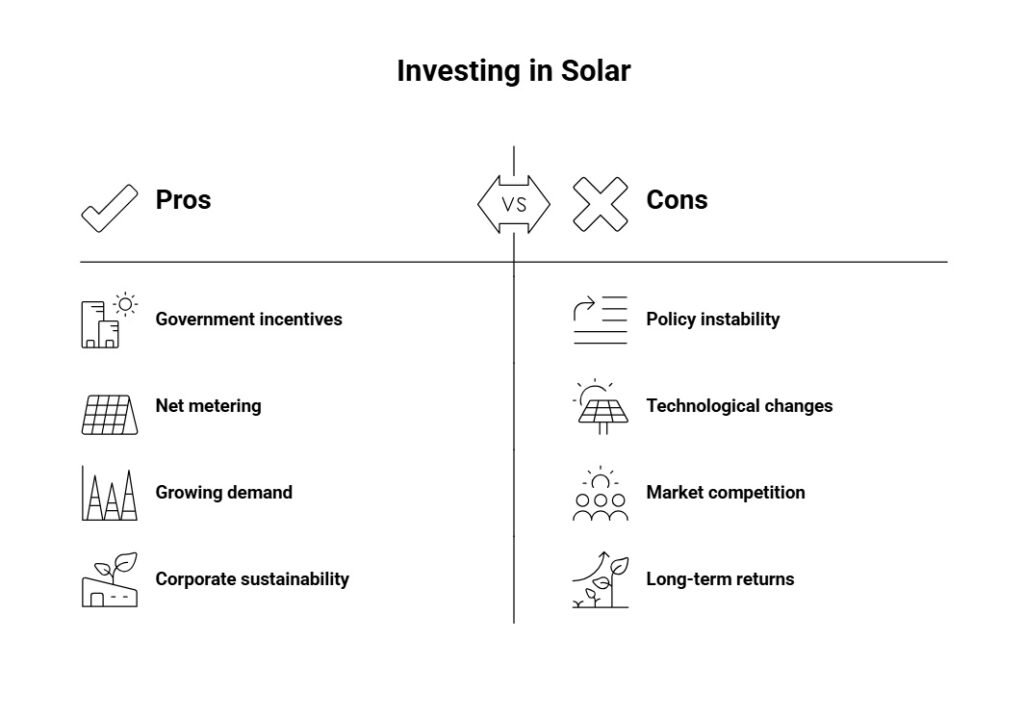
Investing in solar has become increasingly attractive due to:
- Government incentives and subsidies
- Net metering policies
- Growing demand for renewable energy
- Corporate sustainability initiatives
However, investors should evaluate:
- Policy stability
- Technological changes
- Market competition
- Return on investment timeline
From a financial perspective, solar energy often provides long-term returns rather than immediate gains.
Transition to Solar Energy
The global transition to solar energy is driven by:
- Climate change mitigation goals
- Rising fossil fuel prices
- Energy security concerns
- Advancements in solar technology
Countries worldwide are increasing solar capacity as part of their renewable energy targets. As technology improves and costs decline, solar adoption is expected to grow further.
Advantages of Solar Power vs Disadvantages of Solar Power
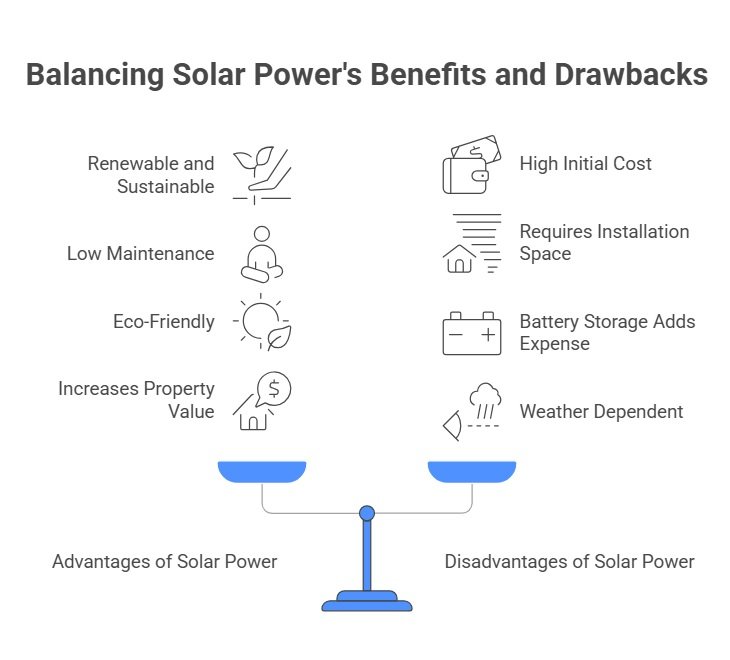
Advantages of Solar Power
- Renewable and sustainable
- Reduces electricity bills
- Low maintenance
- Eco-friendly
- Increases property value
Disadvantages of Solar Power
- High initial cost
- Weather dependent
- Requires installation space
- Battery storage adds expense
Conclusion
Solar energy represents a major step toward sustainable development. The advantages and disadvantages of solar must be carefully evaluated before installation. While the initial cost may be high, long-term savings, environmental benefits, and energy independence make solar energy a compelling option for many households and businesses.
As technology advances and government support increases, solar energy is likely to become even more accessible and economically viable in the coming years.

Sahil Doshi is the Director of Rising Sun Electric with over 10+ years of experience in solar energy and energy conservation. He began his professional journey in Mumbai in 2015 and has since worked on commercial, residential, and industrial solar projects.
